
English Literature GCSE Revision
From how to revise key quotations and using them effectively in your GCSE English Literature exam, to how to identify and analyse key literary themes and effects – the Oxford Revise approach to revision will have you confidently proclaiming your literary analysis as if you were on stage at The Globe!
Our expert authors
Author and Series editor: Lyndsay Bawden
Lyndsay Bawden
Lyndsay is an experienced English teacher and senior leader with over 20 years in education. She has taught GCSE and A-Level English, led departments, and developed curricula, literacy, and reading initiatives across schools nationally. A Senior Examiner and CPD trainer, she supports teachers in effective assessment and pedagogy.
Lyndsay holds a Master’s degree in Senior Educational Leadership, is a Specialist Leader in Education, a Fellow of the Chartered College of Teaching, and has authored educational books. She is also an experienced PGCE tutor, mentoring trainee teachers and developing their classroom practice. Passionate about English, she inspires both students and teachers to achieve their best.
2026-2027 Exam dates
Wednesday, 12 May 2027, AM: Paper 1
Wednesday, 19 May 2027, AM: Paper 2
GCSE results day
| GCSE results published |
| Thursday 20th August 2026 |
| Thursday 19th August 2027 |
| Thursday 19th August 2028 |
| Thursday 23rd August 2029 |
| Thursday 22nd August 2030 |
Useful links
Revision resources
English Literature revision guides
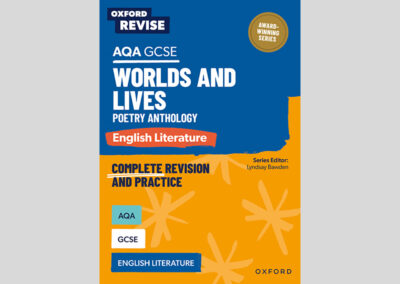
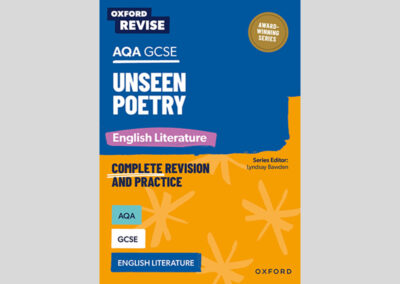
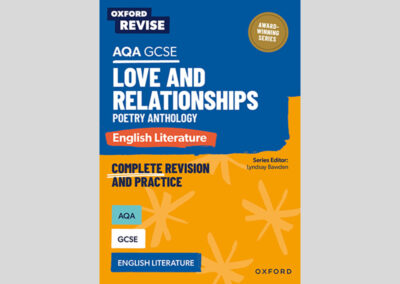
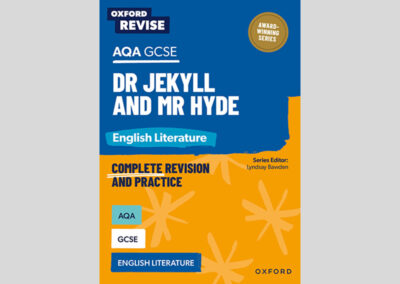
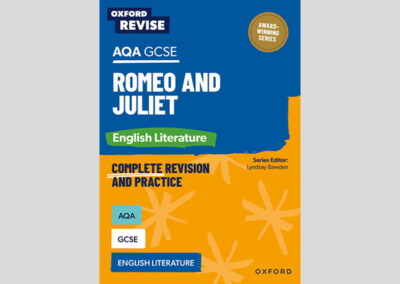
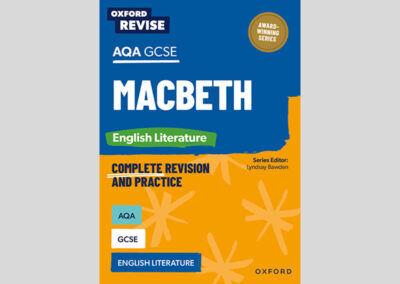
What are people saying about Oxford Revise?
“I’m a former English teacher and would highly recommend this revision guide. It covers plot, themes and character. There are short questions to check comprehension and recall, sample questions and sample answers and you get access to other materials via the QR codes included.”
5* Amazon review
“This is a very extensive revision guide for Macbeth which has a lot of different activities to help children revise. My daughter wasn’t very happy to get it as she’s not enjoying revising… but this book is proving useful already and has lots of different ways to revise.”
5* Amazon review
“Each poem is republished in full (which is really important because you don’t want to be flicking between two different books) and there are a few demonstrations of what a good and not-so-good answer would look like. Easy to use, everything all in one place. Recommended.”
5* Amazon review
“This is brilliant. I hate the fact that pupils are expected to memorise whole poems, but this is a brilliant tool – at the start of the book, there’s a table which lists all the poems, along with all the themes in them. Really recommended.”
5* Amazon review
Revision and exam support
How to revise effectively for GCSE English Literature
Learn more about how to revise effectively for English Literature with simple strategies and tips from Lyndsay Bawden, series editor of Oxford Revise AQA GCSE English Literature.
Your AQA GCSE English Literature exam explained
Find out more about the breakdown of each AQA GCSE English Literature paper in detail. Lyndsay Bawden covers what each section will contain, and the types of questions to prepare for.

Command Words for AQA GCSE English Literature
Understanding command words is essential – they help clarify what the examiners are looking for and tell you how to respond to a specific question.
Study Boost sessions

Shakespeare’s Globe Study Boosts
11 schools, over 300 students studying either Macbeth or Romeo and Juliet at GCSE. Find out what happened at the Oxford Revise and Shakespeare’s Globe Study Boost sessions and find out about the 2026 competition.
Useful resources
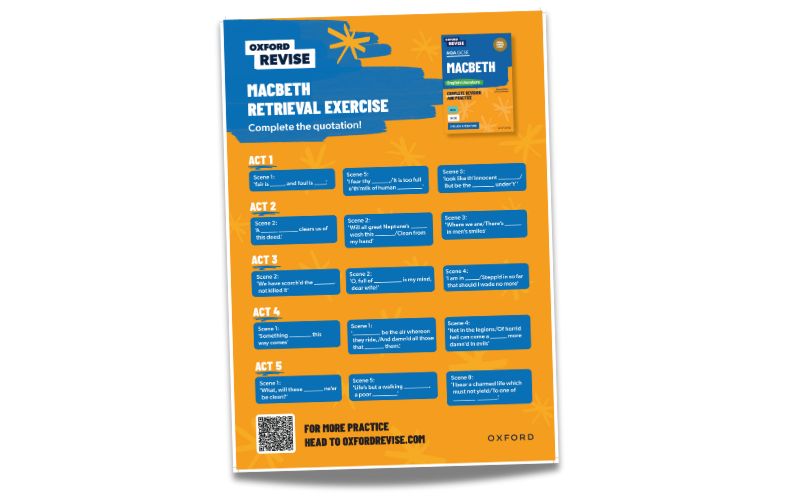
Revision Retrieval Poster: Macbeth
Struggling to remember those key quotes from Macbeth? This free A2 revision poster is here to help!
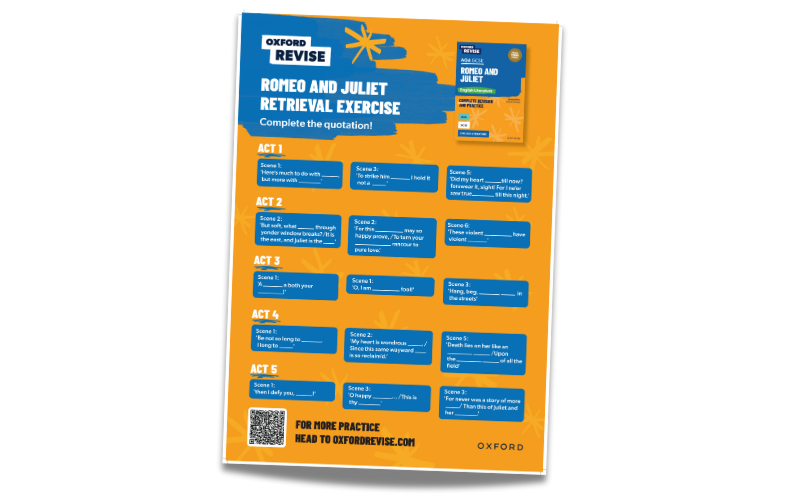
Revision Retrieval Poster: Romeo and Juliet
Struggling to remember those key quotes from Romeo and Juliet? This free A2 revision poster is here to help!
How does Oxford Revise support your English Literature GCSE revision?
We have a wealth of experience in supporting students for AQA English Literature GCSE exams. Our approach includes:
- Knowledge organisers: These are slightly different depending on whether you are revising poetry, novels or drama. The drama knowledge organisers look at each act and character in detail, what the audience learns, and the writer’s methods. The poetry knowledge sections have every poem in the collection in full, with details about how the poet conveys different ideas. The novel knowledge organisers examine each chapter, character and writer’s methods. They all help to build an in-depth understanding of each set text.
- Retrieval practice: Use the retrieval questions to test your understanding of the key concepts and check your memory of important quotations and their significance. Why not stick the quotes around your house and use the questions to make your own flashcards?
- Practice questions: Before you get to the practice exam-style questions, there are sample responses so that you can see the difference between a lower-level and higher-level answer. They’re marked up with examiner comments to give you tips and suggestions that you can use within your own responses.
Straight-forward revision that works!
.