Science A Level Revision
Studying Biology, Chemistry and Physics can seem like a daunting task. Whether you’re studying one, two or all three sciences at A Level, there’s a lot of content to get through! The Oxford Revise approach is backed by cognitive science research, so it’s not just based on a hypothesis. Our expert team are at your side sharing their experience, tips and strategies to give you the confidence you need to succeed.
2025-2026 Exam dates
Biology
Thursday, 4 June 2026, PM: Paper 1
Friday, 12 June 2026, AM: Paper 2
Tuesday, 16 June 2026, AM: Paper 3
Chemistry
Tuesday, 2 June 2026, AM: Inorganic and Physical Chemistry
Tuesday, 9 June 2026, AM: Organic and Physical Chemistry
Monday, 5 June 2026, AM: Paper 3
Physics
Wednesday, 20 May 2026, PM: Paper 1
Monday, 1 June 2026, AM: Paper 2
Monday, 8 June 2026, AM: Paper 3
A Level results day
A Level results published
Thursday 13th August 2026
Thursday 12th August 2027
Thursday 12th August 2028
Thursday 16th August 2029
Thursday 15th August 2030
Useful links
Revision resources
Top revision tips
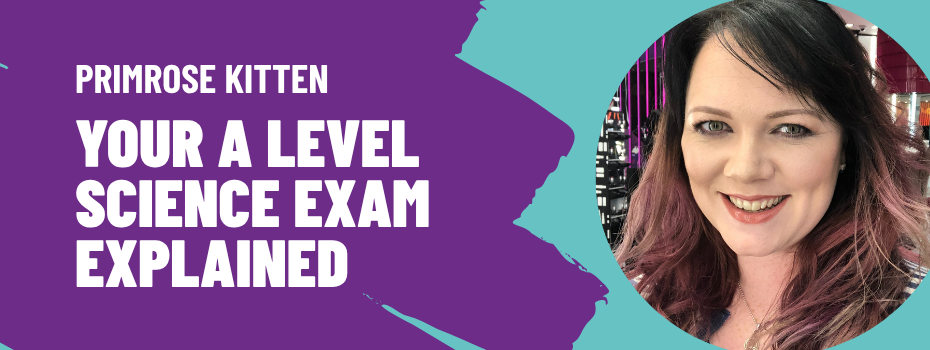
Your Science A Levels explained
Watch Series Editor Primrose Kitten break your A Level Science exams down for you. Primrose gives you lots of useful tips including the importance of showing your working, and tricks for highlighting command words.
Revision and exam support
When should I start revising?
We’ve got lots of support for you on how to build a revision plan that works however much time you’ve got. Check out how that pesky forgetting curve works, and how you can combat it with a stellar plan. Spoiler alert: it’s Knowledge, Retrieval, Practice.
12 must read tips before you start A Level revision
Try out expert strategies and tips on creating the ultimate revision plan for your A Level exams while looking after your wellbeing.
Practising past papers
How does Oxford Revise support your Science A Level revision?
We have a wealth of experience in supporting students for AQA Biology, AQA Chemistry, AQA Physics, OCR Biology, OCR Chemistry and OCR Physics A Level exams. So how does it work? With Oxford Revise you have:
- Knowledge organisers: Establishing the key knowledge and concepts you need to know for every topic, these knowledge organisers provide a solid base for you to start from. They are laid out in a way to show how ideas build and flow from one another and the synoptic links between topics. There are diagrams and illustrations, key terminology and revision tips.
- Retrieval practice: So, how well have you remembered all of this content? Answering sets of retrieval questions will show you just that, and also helps to move this knowledge from your short- to your long-term memory.
- Practice questions: The final step is to put all of your revision in to the practice and answer the 100s of exam-style questions. Every topic has questions in the common formats you will see when you open your exam-paper. Being familiar with these means that you can focus on answering the question and showing them what you’re made of!